
Lingo & Jargon Busting
Understanding window jargon shouldn’t require a dictionary. This guide breaks down the most common terms you’ll come across so you always know exactly what you’re choosing — no confusion, no technical waffle.
What Does Good Look Like?
Energy Efficiency
U-Values - What Does It Mean?!
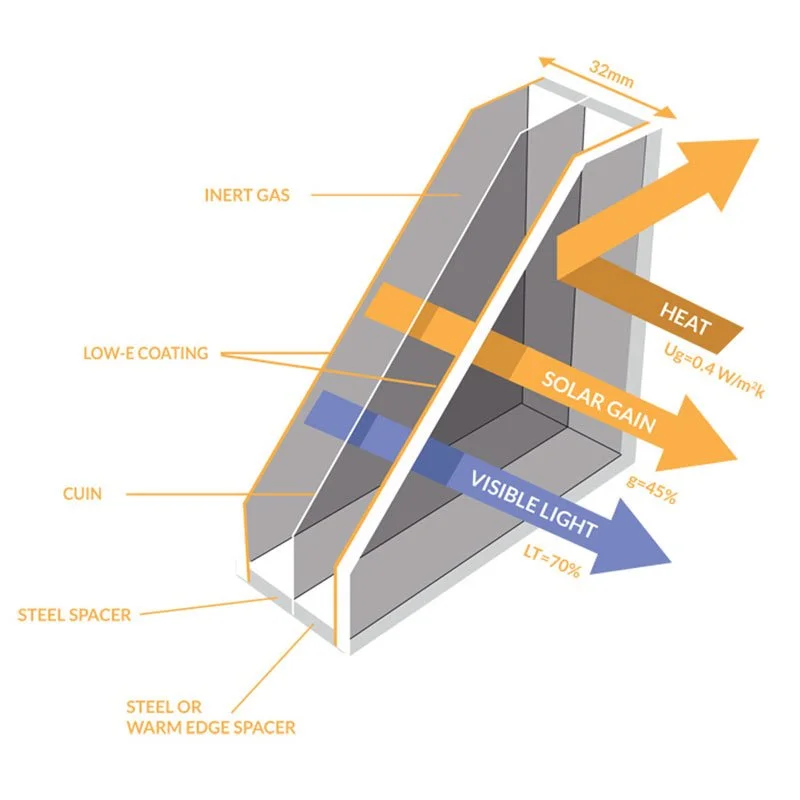
U‑value tells you how easily heat flows through a window/door). Lower = better insulation.
A low U‑value resists heat flow whichever side is warmer: it keeps heat inside in winter and slows outside heat entering in summer. That’s why low‑U windows help both comfort and energy use year‑round
The Science:
W/m²·K — that’s watts per square metre per degree of temperature difference.
W (watts) = how much heat power is moving. Think of it as the “rate” of heat flow.
m² = per square metre of the window area. Bigger area → more total heat flow for the same U‑value.
K (kelvin) = for each degree of temperature difference between inside and outside.
So for a double glazed unit at 1.2 W/m²·K lets 1.2 watts per m² pass for each 1 °C difference between the outside of your home and inside.
Keeping It Simple:
U‑values, g‑values, frame ratings and spacer performance are all useful, but none of them tell the full story on their own. A window is a complete system and come complex calculations are required to get a true comparison.
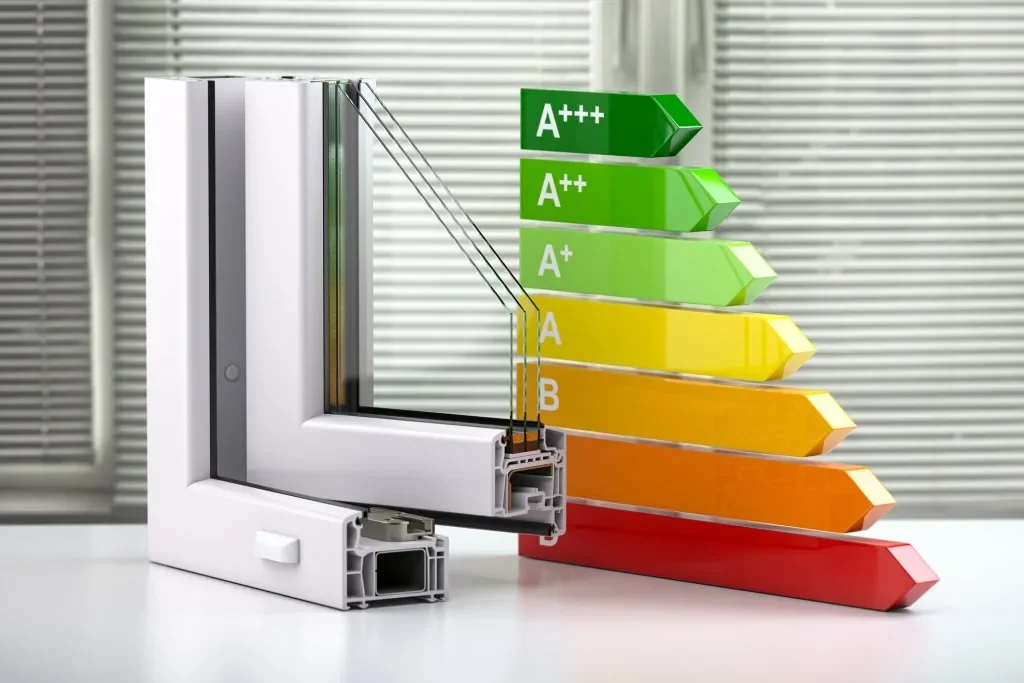
Thankfully many manufacturers are using the BFRC Window Energy Rating (WER) scale. The UK’s independent, appliance‑style energy label for windows.
WER rates overall window efficiency from A++ (best) down to E, using a colour‑band system just like fridge or appliance labels.
Can You Install Products That Are Not Rated Using the Energy Rating Scale?
in Short Yes!
We’ve worked with clients to import some interesting designs from the continent who only work with U-Values. The good news is that as we provide all of this certification via our registration with FENSA we can demonstrate the correct performance is being met.
The Regulation
U‑values, g‑values, frame ratings and spacer performance are all useful, but none of them tell the full story on their own. A window is a complete system and come complex calculations are required to get a true comparison.
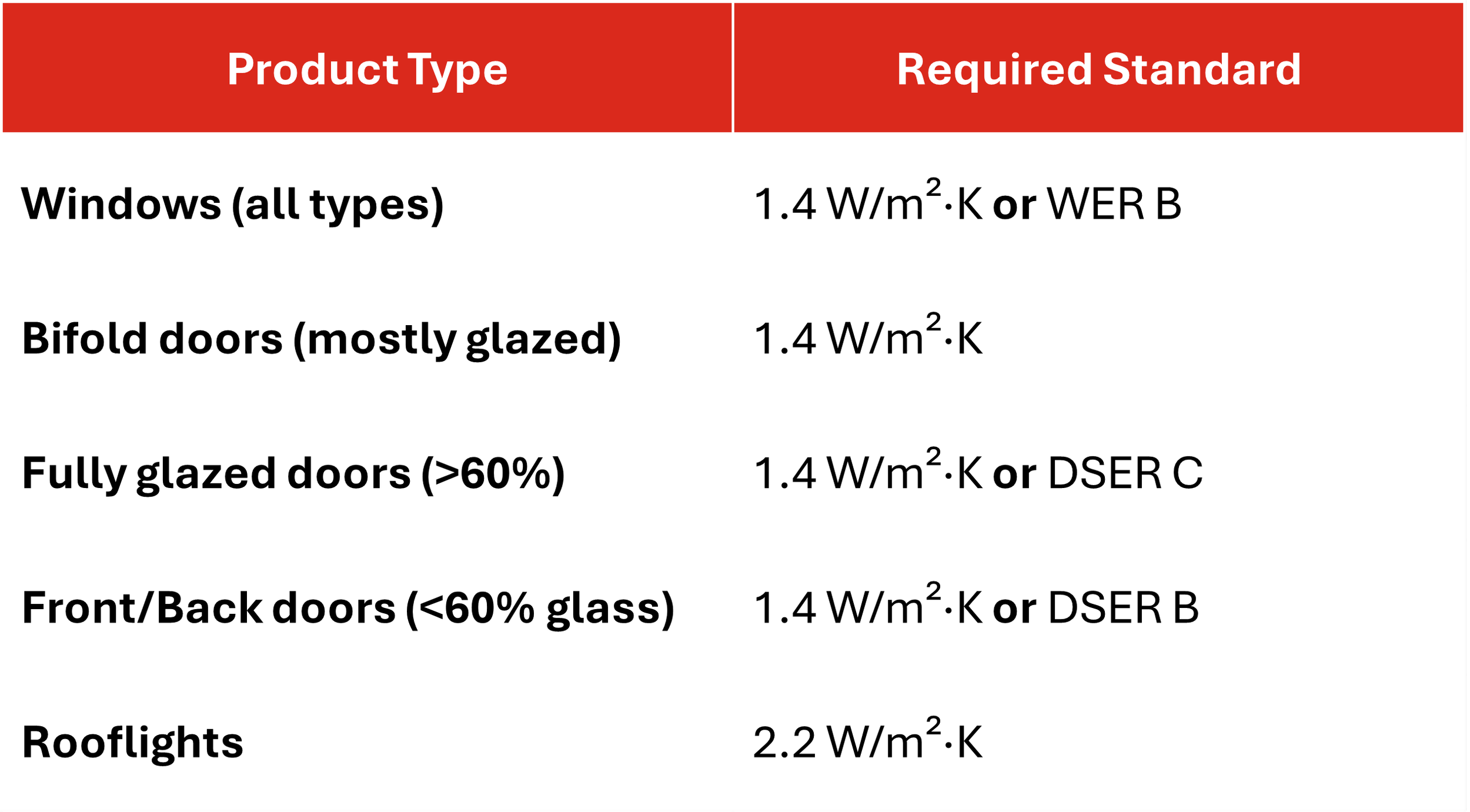
Thankfully, independent schemes now offer a simple one‑stop way to judge this. For windows, many manufacturers use the BFRC Window Energy Rating (WER) scale, which grades overall performance from A++ to E using the familiar appliance‑style label. For doors, the equivalent Door Set Energy Rating (DSER) provides the same simplified approach and is fully recognised under current Building Regulations for replacement installations.

Ready to Discover Your Options?
Want expert advice for your home? Speak with a Design Consultant for straightforward, zero‑pressure guidance.